
As coffee production faces mounting pressure from climate change and disease, international research is making advanced breeding tools more accessible.
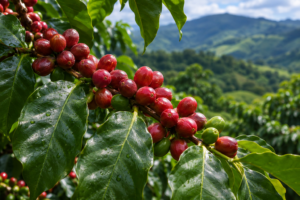
Coffee is one of the world’s most important agricultural commodities, supporting millions of farming households and a global industry worth billions of dollars. But production faces growing challenges from rising temperatures, changing rainfall patterns, pests and diseases.
Developing more resilient varieties is increasingly important, but coffee breeding is a lengthy process, with breeding cycles that can extend over decades. Genomic selection offers opportunities to accelerate genetic gain, using molecular markers to support earlier selection and more informed breeding decisions.
Yet the adoption of genomic tools in Arabica breeding has been constrained by cost, limited standardisation and the technical challenges of working with its complex genome.
To help overcome these barriers, an international research collaboration led by World Coffee Research (WCR) has developed a new genotyping panel specifically designed for Arabica coffee.
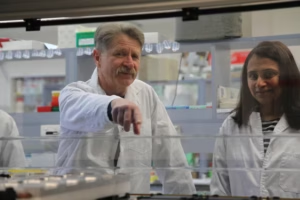
“Our goal was to move beyond genomic research and deliver a tool that coffee breeders can use routinely. Working with Diversity Arrays Technology and our international research partners, we've developed a practical, cost-effective genotyping platform that can support better breeding decisions across a wide range of programs.” — Dr Jorge Berny, Research Scientist – Breeding and Genomics, World Coffee Research
Dr Jorge Berny, Research Scientist – Breeding and Genomics, World Coffee Research
Published in Frontiers in Plant Science in November 2026, the research describes a medium-density panel of 5,053 SNP markers designed specifically for Arabica coffee and implemented using DArT’s targeted genotyping technology, DArTag.
Addressing the complexity of Arabica's genome
Arabica is an allotetraploid species, carrying two closely related subgenomes inherited from its ancestral species, Coffea canephora and Coffea eugenioides.
Their high sequence similarity creates challenges for SNP discovery and genotyping. Markers must be reliably assigned to the correct subgenome to avoid ambiguous results, particularly when analysing genetic material introduced through interspecific breeding.
DArT contributed its DArTreseq technology to support SNP discovery across 94 genetically diverse Arabica accessions, including wild Ethiopian material, traditional varieties and introgressed breeding lines.
Using its proprietary DArTag design pipeline, DArT then helped convert selected variants into a multiplexed genotyping assay, with particular attention to subgenome specificity, genome coverage and reliable marker performance.
Following quality control, 4,974 markers provided approximately 98.7% coverage of the reference genome’s span, although marker density varies across genomic regions. More than 92% of assessed probes were predicted to be locus-specific, supporting reliable discrimination between Arabica’s two subgenomes.
The panel was subsequently validated across diverse germplasm and breeding populations, demonstrating its ability to resolve genetic relationships and distinguish introgressed from non-introgressed material.
A shared genotyping standard for coffee breeding
Beyond its technical performance, the panel offers an important advantage for the international coffee breeding community: a common set of genetic markers that can be used across breeding programs and institutions.
Different genotyping platforms and marker sets can make it difficult to integrate results across populations, breeding cycles and research organisations. This limits opportunities to combine datasets and build on previous investments in genetic analysis.
The new panel addresses this by providing a standardised marker set that breeding programs can adopt independently while generating directly comparable data.
It also incorporates 53 markers from an existing low-density Arabica variety identification panel, providing continuity with earlier datasets.
For breeding organisations, this interoperability creates opportunities to:
- Compare genetic diversity and population structure across breeding collections.
- Combine compatible genotyping datasets from different institutions or breeding populations.
- Support collaborative trait mapping and genomic prediction research.
- Maintain greater consistency in genetic analysis across successive breeding cycles.
This is particularly valuable in coffee, where breeding programs operate internationally and access to diverse germplasm is essential for improving disease resistance, productivity and adaptation.
A shared genotyping platform does not remove the need for consistent phenotyping, population-specific validation or appropriate data governance. It does, however, remove an important technical barrier to collaboration and data integration.
A stronger foundation for breeding decisions
The panel was designed to support practical molecular breeding applications without the expense and data-processing requirements of very high-density genotyping.
Its potential applications include genomic prediction, marker-assisted selection, parent selection, germplasm characterisation, variety verification and genetic linkage mapping.
The research demonstrated the panel’s ability to distinguish wild, domesticated and introgressed germplasm, including material carrying genetic contributions from other coffee species associated with disease resistance.
It also enabled construction of the most marker-dense Arabica genetic linkage map reported to date, using 1,854 markers across a population derived from a Marsellesa × Geisha cross.
For breeding programs, these capabilities provide a stronger foundation for integrating genomic information into routine selection decisions. When combined with suitable phenotypic data and validated prediction models, genotyping can help prioritise promising material earlier, improve resource allocation and potentially shorten breeding cycles.
From research collaboration to routine application
The new panel reflects a collaboration between WCR, DArT and international research institutions contributing germplasm, breeding populations and scientific expertise.
DArT’s role extended from marker discovery and assay design through genotyping, quality control and data analysis, helping translate genomic research into a scalable, operational testing platform.
The resulting DArTag assay is now commercially available through DArT to public and private breeding programs worldwide.
By combining genome-wide coverage, subgenome specificity and a common marker standard, the panel provides an accessible foundation for wider adoption of molecular breeding in Arabica coffee.